

Welcome to Leadership Insights, a series from Right International. We sit down with senior insurance executives to uncover hard-earned lessons, career-defining pivots, and the critical advice they would pass down to the next generation of insurance talent.
I am delighted to feature Lee Anderson, Deputy Group CEO at Specialist Risk Group (SRG).
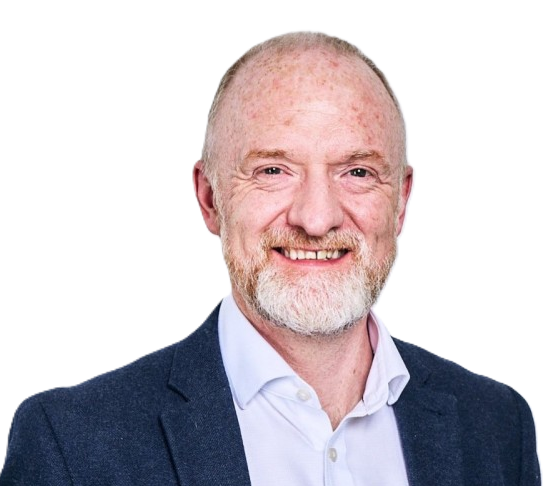 Lee’s career has encompassed pretty much all the insurance industry has to offer.
Starting as a junior in an accounts department, his early career included stints in claims, underwriting, insurance and reinsurance before pursuing a specialist career in the marine and aviation sectors.
From composite insurer into Lloyd’s of London before “jumping the fence” into the heady world of broking.
Working in both the UK Regional and International speciality broking arenas, punctuated with a period at a UK “Consolidator”, his roles have encompassed senior leadership positions, including at Board level, in various strategic and M&A related positions.
Today, as the Group Deputy CEO at Specialist Risk Group, Lee oversees the Group’s strategic direction and driving growth across its portfolio of specialist insurance businesses.
The Turning Point
What single decision or pivot in your career had the greatest impact on your trajectory?
Actually, my biggest turning point wasn’t a decision I made myself and I have written about this before. It was having a boss early in my career who genuinely wanted me to succeed.
As I didn’t go to University (or indeed have any “A” levels!) I had always believed that the only route for me was to work harder than anybody else and if you performed well and made yourself valuable, progression would naturally follow. But I learnt that’s not necessarily how organisations work.
Sometimes, if you’re very good at what you do, the person you’re working for has every incentive to keep you exactly where you are. You’re making their life easier.
My first “real” boss was different. He was the first person who genuinely wanted me to do better — even when ultimately that meant moving beyond him. He gave me an opportunity and a step up in my career that changed my trajectory.
I’ve never forgotten that and it’s influenced how I think about leadership today. If you’ve got somebody exceptional working for you, your responsibility isn’t to hold onto them for your own benefit. It’s to help them become everything they’re capable of becoming even if that eventually means losing them. When we started SRG we called them the “heroes”. Finding people who were better than the positions they found themselves in and to try give them the opportunity to elevate themselves.
The Hard Lesson
What is the most valuable lesson you learned from a major setback or failure?
One of the hardest things I think I realised is that being needed isn’t necessarily the same thing as being valuable. Putting too much of yourself into a business so that it affects those around you outside of work has consequences that can be difficult to reconcile.
Particularly when you’re building a business, you get used to everything coming through you — decisions, clients, people, problems. And if I’m truthful, there’s probably an element of ego in that, being indispensable feels good.
But eventually you realise that if the business genuinely can’t function without you, you haven’t built a very good business or at the very least have restricted its growth through your own bandwidth.
I’ve recently enjoyed a period where I’ve had some time away and seeing the business continue to perform with people stepping up in my absence is wonderful to see.
So I guess the ultimate hard lesson is, you are nearly always not as indispensable as you think you are!
The Industry Future
What deeply held insurance industry belief or practice do you think the next generation needs to challenge?
I’d challenge the assumption that as businesses get bigger, they inevitably become more political, more bureaucratic and more impersonal.
You hear it all the time: ‘That’s just what happens when you get to a certain size. We need to be more Corporate ’ I don’t wholly accept that.
Scale inevitably brings some complexity and of course you need more structure, more process and clearer accountability. But politics, bureaucracy and losing the personal connection with your people aren’t inevitable consequences of growth. They’re choices — or, more often, they’re things you allow to happen when you don’t continually reinforce your core beliefs.
I worked in Lloyd’s of London during the transition from names capacity to Corporate capital. Did Lloyd’s need to reform? Absolutely. Did processes need to improve as well as performance? Impossible to argue against. Does Lloyd’s now feel distinctly different from other insurance entities? I’m not so sure.
I think one danger is that leaders start accepting behaviours in a large organisation that they would never have tolerated when it was small. Middle managers (or Top Hatters as one of our early investors termed them) who manage process rather than leading people or strategy.
So the challenge for the next generation of leaders is to prove that you can build genuinely large businesses that still feel entrepreneurial, where decisions can be made quickly and individuals still feel that what they do matters.
Scale doesn’t have to change your culture but is does become inevitable if you keep believing it is.
The Tech Shift
How should future insurance leaders balance traditional risk expertise with fast-moving technology like AI?
I’m hugely optimistic about AI, particularly in specialist insurance. I don’t believe AI is going to replace exceptional brokers or underwriters. I think it’s going to expose the difference between the average ones and the exceptional ones.
AI will increasingly be better than us at processing information, analysing data, producing documents and doing many of the things that consume huge amounts of our time today.
Great. Let it.
Because the value of the best people in our industry lies somewhere else: judgement, creativity, relationships, negotiation, understanding complex risk and sometimes understanding what a client needs before they’ve articulated it themselves.
We’ve already seen that enthusiasm in our own business — some of our team recently won an AI hackathon for example and that’s exactly the attitude I want to encourage.
So I’d tell somebody starting today: become brilliant at insurance and embrace AI aggressively. I heard somebody say that you should use technology to make yourself more human. I like that.
The Legacy Advice
If you could give your younger self one piece of advice on your first day in the industry, what would it be?
Back yourself but keep your own counsel!
When you’re young, you walk into rooms with senior people and assume that because they’re older, more experienced or have bigger job titles, they must know things you don’t. You also assume all senior people are excellent and must have got their job precisely because they are excellent.
From my early days working in a large Composite insurer I soon realised that survival based promotion is a real thing, navigating a career by never putting your head above the parapet and getting promoted by attrition.
These people do not want you to rock the boat!! You don’t need to be liked by everybody but you absolutely must not be a thorn in these peoples side.
So I’d tell my younger self: be curious, listen to people who know more than you, but don’t underestimate your own instincts. You don’t need to know everything before you’ve earned the right to have a view but think hard about how best to articulate that view
Right International is a leading provider of executive search services to the global insurance sector.
If you are looking to add to your team now or in the near future or are considering your next career move, please contact myself or one of the team.
Follow us on LinkedIn for regular industry updates, leadership articles and latest vacancies.
All the best,
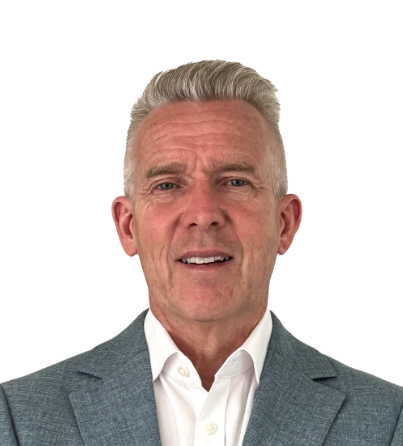
Gary Pike
Founder & MD Right International
garypike@rightinternational.com











.)
.&description=&image=https://www.rightinternational.com/wp-content/uploads/2024/06/London-scene-with-logo-1.jpg)